From skills gaps to blue growth
Do we have the skills and competences needed for the blue economy we want to build over the next 5, 10 or 20 years?
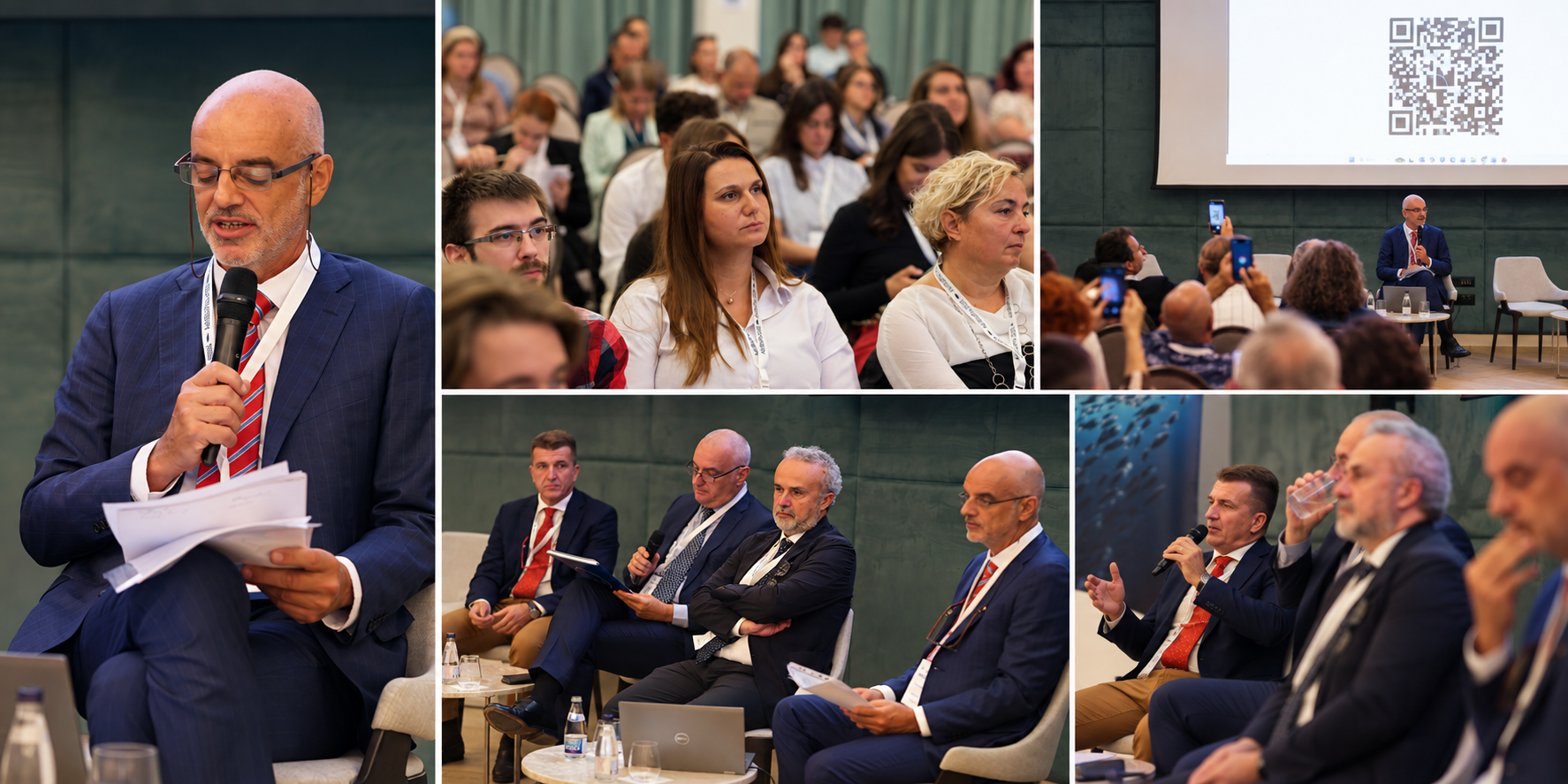
I opened the SA SKILLS High-Level Panel, “Improving Skills Availability for the South Adriatic Blue Economy”, with this question during AdriBioPro2026 in Kotor.
As moderator, I brought together perspectives from EUSAIR, the Interreg IPA South Adriatic Programme, higher education, public institutions and the blue economy community. Our discussion explored how stronger connections between these actors can turn skills development into sustainable growth.
Connecting policy with practical delivery
The conversation followed the skills-development chain: from policy and funding programmes to education, cooperation networks, flexible training instruments, qualifications and practical delivery.
Each link matters. Education providers need reliable information about changing labour-market needs. Companies need access to relevant training and expertise. Public institutions help create the conditions for cooperation, recognition and investment.
The challenge is to make these connections work across sectors and borders.
Priorities for the South Adriatic
The discussion highlighted several priorities:
Align education and training more closely with labour-market needs.
Expand practical and work-based learning.
Make upskilling and reskilling faster and more accessible.
Strengthen cross-border recognition and mobility of competences.
Develop a common language for blue skills through the South Adriatic Blue Qualification Framework — SA BlueComp.
We also explored how the Adriatic Blue Growth Cluster can connect companies, universities, research organisations and public institutions, and how the Blue Economy Training Centre can help translate skills policy into practical learning.
Bringing the audience into the discussion
Audience participation was an important part of the panel. Using Mentimeter, participants shared their views on barriers to skills availability, priority future competences and the value of cross-border cooperation.
They also considered which actions could make the greatest difference over the next three years. This brought the discussion closer to the practical concerns of people working in education, institutions and blue economy sectors.
Skills gaps are a system challenge
My main takeaway was that skills gaps require a coordinated response across education, employment, policy and business.
The South Adriatic needs stronger connections between its education and labour-market systems, and between the people and institutions working within them. A competitive blue economy depends on the capacity to identify, develop, recognise and continuously update skills across borders.
That requires sustained dialogue, shared evidence and cooperation that continues beyond individual training activities.
From dialogue to action
My thanks to Michael Chatziefstathiou, Antonio Agrosi, Danilo Nikolić, Miško Rađenović, Valeria Patruno, Leida Matja and Mirko Đurović for their contributions, and to everyone in the audience who joined the discussion.
Moving from blue skills to blue growth means turning this dialogue into connected policies, relevant learning opportunities and lasting partnerships.
Related content